
A house fire can leave several types of property damage behind at the same time. Flames and heat may affect materials near the source, smoke and soot can move into rooms that never burned, and water used by firefighters or sprinkler systems can soak floors, walls, ceilings, insulation, and belongings. That means a fire contained to one Chattanooga room can still create restoration needs elsewhere in the home.
For homeowners, the first few days can bring plenty of questions. What can be restored? Where did the smoke travel? Is there hidden water damage? How does the insurance claim work? How long will the recovery take?
Rytech Restoration of Greater Chattanooga helps homeowners, commercial property owners, property managers, insurance professionals, and referral partners work through those questions. The local team provides 24/7 emergency service, IICRC-certified technicians, fire and smoke restoration, structural cleaning, professional deodorization, HEPA air scrubbing, contents cleaning, packouts, advanced moisture detection, water damage restoration, and mold remediation. Rytech also works directly with insurance professionals and offers direct insurance billing when applicable.
Understanding what happens after the firefighters leave gives you a better starting point for the decisions ahead.
What Are Common Causes of House Fires in Chattanooga?
Cooking remains a major concern for Tennessee homeowners. Tennessee State Fire Marshal data for 2024 identified cooking as the leading known cause of home fires in the state. Cooking-related fires caused five civilian deaths, 26 civilian injuries, eight fire-service injuries, and more than $19.2 million in property damage during that year.
Kitchens are not the only area to consider. Electrical equipment, heating systems, fireplaces, candles, grills, smoking materials, garages, and other ignition sources can start fires. Chattanooga's mix of older homes and newer construction also means electrical systems, building materials, layouts, and mechanical systems vary considerably from property to property.
Seasonal conditions change the picture too. Colder weather increases the use of furnaces, fireplaces, and portable heating equipment. During warmer and drier periods, wooded areas around Southeast Tennessee and North Georgia can create another type of fire exposure for nearby properties.
Property layout affects how damage spreads after ignition. Open rooms can allow smoke to move broadly, while stairwells, attics, wall cavities, crawl spaces, and HVAC systems provide less obvious pathways. A relatively small fire can therefore produce a restoration area much larger than the visible burn zone.
“With more than two decades of leadership experience across restoration, flooring, and construction, I’ve seen how differently property damage can affect the materials inside a building. Chattanooga has older homes, newer construction, wood framing, masonry, drywall systems, crawl spaces, finished flooring, and commercial properties with much larger mechanical systems. Whether the loss starts with cooking, electrical equipment, heating, fire, or the water used to extinguish it, our job is to understand how the damage moved through those materials before deciding what can be restored.”
Ralph Falavinha, Owner, Rytech Restoration of Greater Chattanooga
Ralph's local Rytech biography identifies more than two decades of leadership experience in business management, operations, and technical work across the restoration, flooring, and construction industries. At Rytech Greater Chattanooga, he oversees emergency services, mold remediation, and fire restoration operations.
What Should I Do Immediately After a Fire?
Personal safety comes first. Leave the building, make sure everyone gets to a safe location, and follow instructions from firefighters and emergency personnel. Do not treat the end of visible flames as the end of the emergency response.
Once emergency officials release the property, contact your homeowners insurance provider and a professional restoration company. Photographs, video, inventories, and other early documentation can help establish the condition of the property before restoration progresses.
Resist the urge to start wiping soot from walls or moving affected belongings through clean areas. Fire residues are not ordinary household dirt, and the characteristics of soot can vary based on what burned. Moving contaminated items can also transfer residues into previously unaffected spaces.
Rytech Restoration of Greater Chattanooga provides 24/7 emergency response. After speaking with a live specialist, the local operation states that an IICRC-certified technician can arrive within four hours or less. That response begins with assessment and a recovery plan before restoration work moves forward.
How Is Fire Damage Assessed and Inspected?
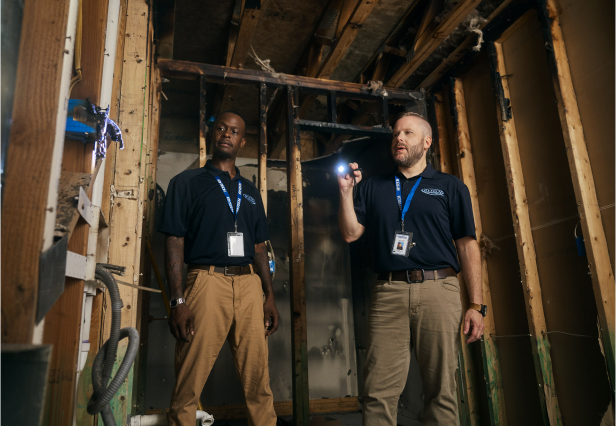
A professional inspection follows the damage rather than stopping at the visible fire area. Technicians evaluate burned and heat-affected materials along with smoke, soot, odor, contents, structural components, possible HVAC involvement, and water introduced during firefighting.
Think about a kitchen fire in a Chattanooga home with hardwood flooring and a crawl space. Flames may remain around the cooking area while smoke moves through adjoining rooms. At the same time, firefighting water can travel beneath cabinets, flooring, or walls. Each pathway requires a different type of investigation.
Water damage inspection is especially measurement-driven. ANSI/IICRC S500 directs restorers to identify and document the extent of water migration and lists tools such as moisture sensors, thermo-hygrometers, invasive and non-invasive moisture meters, infrared thermometers, and thermal imaging cameras. Thermal imaging can reveal apparent surface-temperature differences associated with possible moisture, but those findings should be verified with a moisture meter.
S500 also directs restorers to inspect adjoining rooms because water can travel under walls or enter from above even when floor surfaces do not look wet. That principle becomes highly relevant after a fire where large amounts of water were needed to extinguish the flames.
A good inspection creates information that homeowners, property managers, insurance professionals, and restoration technicians can use to understand the scope of the loss.
How Do I Start an Insurance Claim After a Fire?

Contact your insurance company or agent and report the loss. Provide the basic information about what happened, when the fire occurred, and which areas appear affected. Your insurance professional can explain the coverage, deductible, limits, and policy provisions that apply to your specific claim.
Documentation gives everyone involved a common reference point. Photographs, videos, inventories, receipts, and records of affected belongings can help document the loss. Professional restoration records add inspection findings, measurements, moisture readings when applicable, photographs, and information about work performed.
Most homeowners do not handle fire claims regularly, so the process may be unfamiliar. Agents, adjusters, carriers, and restoration professionals each play different roles, and clear communication helps those roles work together.
Rytech Restoration of Greater Chattanooga works with insurance companies and can bill them directly when applicable. The local team's inspection and project documentation also give insurance professionals useful information about what technicians found and what restoration work is underway.
That coordination has value beyond residential losses. Commercial property managers, business owners, agents, adjusters, and carriers may be managing occupants, business interruption, contents, equipment, and restoration decisions at the same time.
What Is the Difference Between Professional Fire Restoration and DIY Cleanup?
Imagine finding a dark soot mark on a painted wall. It may look like something a household cleaner and sponge can handle, but both the residue and the material underneath it matter.
Soot produced by cooking oils can differ from residues created when wood, plastics, fabrics, electronics, or other materials burn. Painted drywall, masonry, finished wood, metal, tile, carpet, upholstery, and household contents also respond differently to cleaning.
Professional restoration begins by understanding those conditions and choosing a process appropriate for the affected material. Fire restoration work can progress from less aggressive cleaning methods toward more aggressive techniques based on how materials respond.
The broader difference is scope. A professional team evaluates smoke distribution, soot, odor, contents, HVAC involvement, structural materials, and firefighting water together instead of treating each visible stain as an isolated cleaning job.
Rytech uses a restoration-first approach. Materials that can be successfully cleaned, dried, and restored are evaluated before unnecessary demolition takes place. When damaged materials cannot be successfully restored, they can be identified and removed as part of the mitigation scope.
What Does Fire Damage Restoration Usually Cost?
No single price describes a Chattanooga fire loss because the scope can range from localized smoke cleaning to a large property loss involving multiple rooms, contents, water, and heat-damaged materials.
Current 2026 national consumer data from Angi places professional fire damage restoration between approximately $3,083 and $52,031. Those figures represent broad national estimates rather than Chattanooga project pricing. A local inspection provides a much more useful picture because every fire affects a different combination of materials and spaces.
Affected square footage plays a role, but it is only one factor. Fire type, amount of soot, contents, water migration, odor conditions, accessibility, labor, specialty evaluations, and the condition of building materials can all influence the restoration scope.
The amount that can be restored also matters. Successfully cleaning and drying salvageable materials can reduce unnecessary demolition and the costly work associated with removing materials that could have remained in place.
Insurance compensation depends on the individual policy and covered loss. Your insurance professional can explain how dwelling coverage, personal property provisions, deductibles, limits, and other policy terms apply to your situation.
How Are Smoke and Soot Removed After a Fire?
Smoke restoration starts by determining where residues traveled and which surfaces they reached. That may mean looking well beyond the room where the fire started.
Technicians then match cleaning procedures to the affected materials. Drywall, finished wood, metal, masonry, tile, flooring, upholstery, and other surfaces can require different approaches. Restoration methods can progress from lighter surface cleaning toward more aggressive cleaning when the condition of the material calls for it.
Air movement also deserves attention. HVAC systems can carry airborne particles and residues away from the original source, so inspection findings may point toward the need for additional evaluation of the mechanical system.
Rytech Greater Chattanooga lists structural cleaning, HEPA air scrubbing, smoke odor removal, professional deodorization, packouts, contents cleaning, and damage removal among its local fire restoration capabilities.
Homeowners and businesses throughout Southeast Tennessee and North Georgia can turn to Rytech for professional fire and smoke damage restoration in Chattanooga when a property needs professional assessment and restoration.
How Are Smoke Odors Removed?
The smell of smoke can remain after visible soot has been cleaned. When that happens, affected residues, porous materials, contents, or less obvious spaces may still be contributing to the odor.
Professional deodorization works alongside cleaning. Removing the source of fire residues from affected materials addresses the cause rather than simply covering the smell with another fragrance.
Depending on the loss, restoration may involve detailed cleaning, air filtration, ventilation, contents treatment, HEPA air scrubbing, and specialized deodorization procedures. The correct combination depends on what burned, where residues traveled, and which materials were affected.
Odor also provides useful information during restoration. If a room looks clean but still smells strongly of smoke, technicians have another clue that the restoration process may need to look deeper.
Rytech Greater Chattanooga includes smoke odor removal and professional deodorization as part of its fire restoration services.
What Happens When Firefighting Water Soaks a Chattanooga Home?
Water can save a structure from fire while creating a second property damage problem. Fire hoses and sprinkler systems may wet flooring, drywall, insulation, cabinets, framing, ceilings, furniture, and other materials.
The next challenge is finding where that water went. ANSI/IICRC S500 directs restorers to evaluate water migration and establish dry standards and drying goals. A dry standard provides a reasonable approximation of a material's moisture condition before the water intrusion, while a drying goal establishes a target moisture level for affected materials.
S500 states that drying goals should be established by someone qualified through training and experience with moisture meters. Those goals are intended to return structures, systems, or contents to an acceptable condition and inhibit microbial growth.
Chattanooga's humid periods can influence drying conditions, so technicians rely on measurements rather than touch or appearance. Moisture readings gathered during the drying process show whether affected materials are progressing toward their documented goals.
For a homeowner, this changes the question from “Does the floor feel dry?” to “What do the measurements show?”
What Happens if Mold Develops After Fire Sprinkler Use?
Sprinklers and firefighting operations can introduce water into hidden building cavities as well as exposed surfaces. When moisture remains in materials, microbial growth can become another part of the restoration project.
ANSI/IICRC S520 directs mold remediators to evaluate materials according to characteristics such as porosity, their ability to hold mold spores or support fungal growth, and their structural integrity. The standard also calls for engineering controls that reduce cross-contamination between affected and unaffected areas.
Containment can range from source containment for smaller conditions to local or full-scale containment for larger projects. HEPA-filtered air filtration and negative pressure may be used as part of those controls depending on project conditions.
Physical removal remains a core principle. S520 states that mold contamination should be controlled as close to the source as practical and that mold should be physically removed during remediation. Cleaning methods should also minimize dust generation and aerosolization, with HEPA vacuuming and other controls used as appropriate.
Rytech Greater Chattanooga's approach emphasizes containment, professional mold removal, cleaning, and reducing harmful mold spores in the indoor environment. Moisture conditions are addressed alongside remediation so the water and microbial portions of the loss are not treated as unrelated problems.
How Is Structural Damage Handled After a Fire?
Fire and heat can affect framing, roof assemblies, floors, walls, and other structural components. The severity depends on the type of material, proximity to the fire, temperature, and duration of exposure.
Chattanooga-area properties can contain wood framing, masonry, concrete, steel components, drywall assemblies, crawl spaces, and a wide range of flooring and finish materials. Older properties may also contain assemblies that differ considerably from those used in newer construction.
Professional restoration requires recognizing when fire or heat may have compromised a structural component. When those conditions call for specialized evaluation, an engineer or other qualified professional can become part of the recovery team.
Rytech's role centers on mitigation and restoration. Technicians evaluate affected materials, restore those that can be successfully saved, and remove materials that are beyond restoration. Structural engineering, electrical work, roofing, HVAC work, and other specialty needs can then be addressed by professionals qualified for those disciplines.
That restoration-first approach helps prevent a common misconception: a material does not automatically need to be removed simply because it was located near the fire.
Can Personal Belongings Be Saved After Fire Damage?
Smoke exposure does not automatically make every belonging a total loss. Furniture, clothing, décor, household goods, electronics, and other contents can be evaluated according to material, heat exposure, residue, odor, moisture, value, and ability to respond to cleaning.
Some belongings may be cleaned at the property. Others can benefit from professional packout, which creates a more organized process for documenting and moving selected contents while restoration progresses.
Packouts can also open work areas so technicians have better access to affected floors, walls, ceilings, and other building materials. Contents can then be tracked separately from structural restoration.
Rytech Greater Chattanooga provides packouts and contents cleaning as part of its local fire restoration services. That organized process can be particularly valuable on large residential losses and commercial projects with substantial inventories.
For insurance professionals, detailed contents documentation also creates a clearer record of what was affected and how individual items were handled.
What Health and Safety Conditions Can Remain After a Fire?
Extinguishing the flames does not automatically return the property to its pre-fire condition. Smoke and soot residues can remain, heat may have affected building components, electrical systems may need evaluation, and firefighting water can remain hidden inside assemblies.
The affected area may also extend beyond what you can see. Smoke can move upward and through connected rooms or mechanical systems, while water can move downward, beneath flooring, and through wall assemblies.
Commercial properties add more variables. Offices, restaurants, retail stores, multifamily properties, industrial facilities, and other Chattanooga-area buildings may contain larger HVAC systems, specialized equipment, more occupants, and greater quantities of contents.
Ask a better question than, “Where was the fire?”
Ask, “Where did the heat, smoke, soot, odor, and water travel?”
A professional assessment answers that question and gives everyone involved a clearer understanding of the property's condition.
How Long Does Fire Damage Restoration Usually Take?
A small smoke-cleaning project can move much faster than a multi-room fire involving water, contents, odor treatment, structural evaluation, and specialty professionals. That is why reliable timelines start with inspection rather than a generic number.
The affected square footage, amount of soot, drying requirements, contents processing, accessibility, and material condition all influence progress. Insurance coordination and involvement from specialty professionals can also affect the broader recovery schedule.
Restoration projects can change as technicians gain access to previously hidden areas. Discovering moisture underneath flooring or smoke residues inside another space, for example, can expand the original scope.
Communication keeps those changes understandable. Homeowners need to know what is happening in their house, while property managers, agents, adjusters, and carriers may need accurate information about progress, findings, and next steps.
Rytech Greater Chattanooga includes daily job monitoring in its customer promise. That creates regular opportunities to track conditions and progress instead of leaving customers wondering what is happening between the initial inspection and completion.
How Do I Choose a Fire Damage Restoration Company in Chattanooga?
Start by asking about training. Relevant IICRC certifications show that technicians have received education in established restoration principles and procedures.
Next, look at the company's inspection and documentation process. Ask how technicians determine the extent of smoke and water migration, how they evaluate materials before removal, what moisture-detection equipment they use when water is involved, and how project information will be communicated.
Local experience helps too. Chattanooga's mix of historic properties, newer homes, crawl-space construction, commercial buildings, wooded surroundings, and changing seasonal conditions creates restoration situations that benefit from familiarity with the region.
Rytech Restoration of Greater Chattanooga combines local knowledge with an established restoration system. Its local service promises include 24/7 emergency response, IICRC-certified and trained technicians, licensed, bonded and insured service, empathetic customer care, direct insurance billing, insurance collaboration, daily job monitoring, and estimates based on industry-standard pricing tools.
Ralph Falavinha brings more than two decades of leadership experience across restoration, flooring, and construction to the Greater Chattanooga operation. His role includes overseeing emergency services, mold remediation, and fire restoration with a focus on technical standards and customer service.
For homeowners, business owners, property managers, insurance agents, adjusters, carriers, and referral partners, that combination provides something useful during a complicated loss: a local restoration team that can explain what technicians found, what they are doing, and how the work is progressing.
How Can Chattanooga Homeowners Reduce Future Fire Risk?
Fire prevention begins with ordinary routines. Tennessee's 2024 fire data makes kitchen habits a good place to start because cooking was the state's leading known cause of home fires. Staying near active cooking, keeping combustible materials away from heat, and maintaining a clear cooking area can reduce opportunities for ignition.
Seasonal habits deserve attention as temperatures fall. Heating equipment, fireplaces, electrical loads, and portable heaters become a bigger part of everyday life, so maintenance and proper use should be part of a home's fall and winter routine.
Working smoke alarms add another layer of protection. Test alarms regularly and maintain them according to manufacturer guidance. Families can also create and practice an escape plan so everyone knows how to leave the property when an alarm sounds.
Southeast Tennessee and North Georgia property owners should think beyond structure fires as well. Wooded surroundings and periods of dry weather can create wildfire and smoke exposure. Even without direct flame contact, smoke, soot, ash, and odor can affect buildings and contents.
Finally, review your homeowners insurance coverage periodically and maintain a current property inventory. Photos or video of rooms, major possessions, and valuable belongings can create useful documentation if a future loss occurs.
Get Inspected to Stay Protected After Fire or Smoke Damage in Chattanooga

After firefighters leave, the next stage begins with finding out how far the damage actually traveled.
Rytech Restoration of Greater Chattanooga provides emergency property damage restoration for homes and businesses throughout Chattanooga, Cleveland, East Ridge, Hixson, Soddy-Daisy, Red Bank, Collegedale, Signal Mountain, Harrison, and nearby Southeast Tennessee communities, along with Dalton, Fort Oglethorpe, Rocky Face, Rock Spring, and other communities across North Georgia.
If your home, rental property, commercial building, or insured property has been affected by fire, smoke, soot, odor, firefighting water, sprinkler discharge, or related moisture damage, call Rytech Restoration of Greater Chattanooga at (423) 896-2808. Live assistance is available 24/7, and the local team can help you understand what needs to happen next.
GET INSPECTED TO STAY PROTECTED.
FAQs: Answering Your Pressing Fire Damage Repair Questions
At Rytech Greater Chattanooga, we understand how overwhelming fire damage can be. To support you during this stressful time, we've compiled a list of FAQs to help you better understand our restoration services, what the process involves, and what you can expect when you choose Rytech to restore your home or business.


